Chinese Tea
Five thousand years of cultivation, ritual, and philosophy — distilled into a single cup. The world learned to drink tea from China.
Experience Tea Culture茶 · Chá
"Tea is to the East what wine is to the West — a civilisation in a cup."
China is the homeland of tea — a leading producer and consumer with a history of four to five thousand years. There are seven daily necessities in Chinese life: firewood, rice, oil, salt, soy sauce, vinegar — and tea. It is listed last, yet it represents a cultural heritage unlike any other.
The Six Types
Six Major Types of Chinese Tea
Distinguished mainly by production methods, each type carries its own character, flavour, and cultural significance. Tap any to explore.
The most popular type in China. Unoxidised leaves retain their natural colour and fresh, grassy flavour. Associated with the scholarly culture of southern China.
The Craft
Shaped by Hand,
Defined by Fire
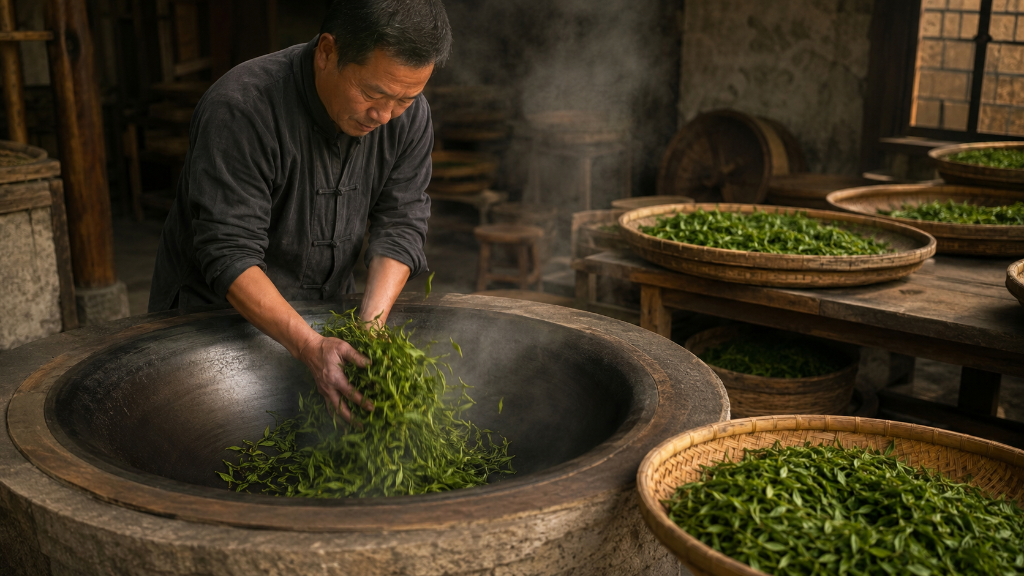
The "kill-green" roasting technique, invented in the Tang Dynasty, unlocked a new world of flavour — ending the raw, grassy character of ancient tea and beginning the refined tradition of today.
5,000 Years
A History of Tea Drinking
2737 BC
Divine Discovery
Legend holds that Shennong, the Divine Farmer, discovered tea when leaves drifted into his boiling water. He noted its restorative properties — and a civilisation's love affair began.
Han Dynasty
From Medicine to Pleasure
Wild tea leaves were cultivated and dried. Tea transformed from medicinal tonic to a prized beverage enjoyed by the nobility and aristocracy.
Tang Dynasty
The Book of Tea
Lu Yu wrote the world's first comprehensive treatise on tea — Chájīng — cementing tea's place in Chinese culture and earning him the title "Saint of Tea".
Song Dynasty
The Golden Age
Tea culture flourished. Teahouses became the heart of social life. Emperors wrote about tea. Whipped matcha-style tea became fashionable among the literati.
Ming Dynasty
Loose Leaf Revolution
Emperor Zhu Yuanzhang switched China from compressed cake tea to loose leaf — the tradition we know today. The six major tea types all developed in this era.
Today
A Living Heritage
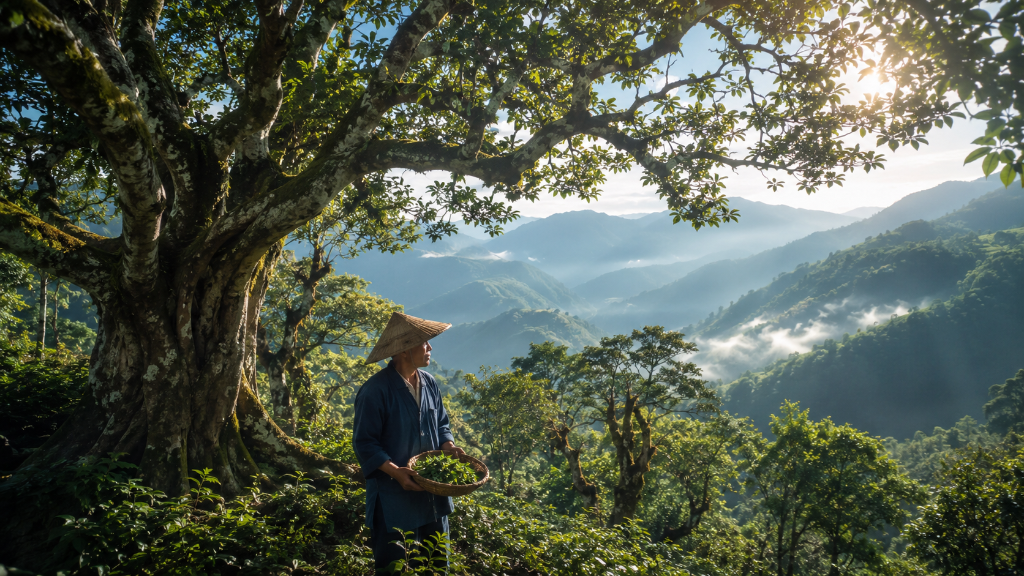
China produces more tea than any nation on earth. Ancient wild trees over 1,000 years old still grow in Yunnan. Tea remains woven into every dimension of Chinese life.
Across China
Tea Customs by Region
From Cantonese teahouses to Tibetan highlands — the cup changes, but the warmth never does.
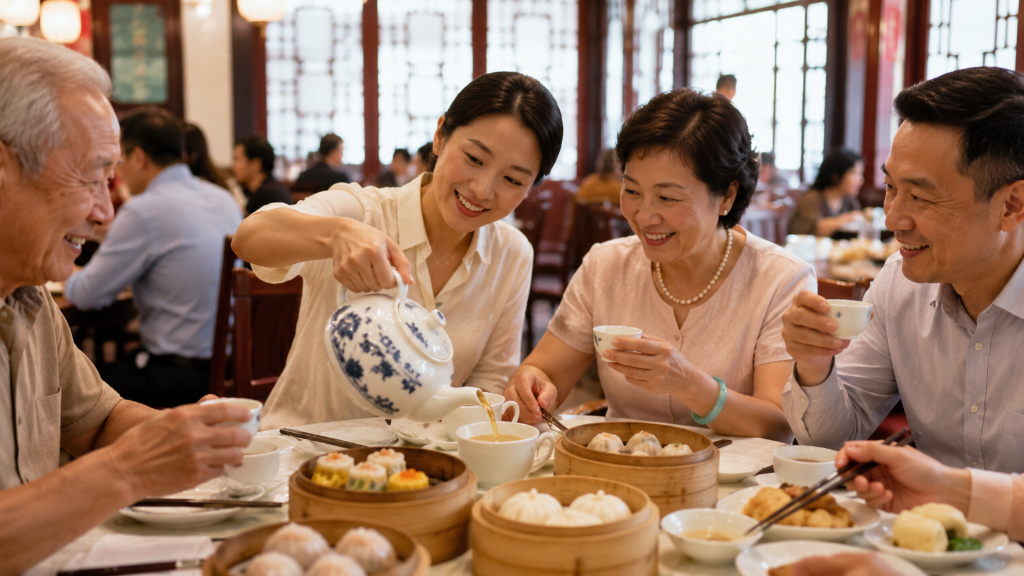
Guangdong · Yum Cha
Morning tea — 早茶 — is a sacred ritual. Families fill teahouses for dim sum and endless pots of Pu'er, bonding over bamboo steamers in the warm hum of conversation.
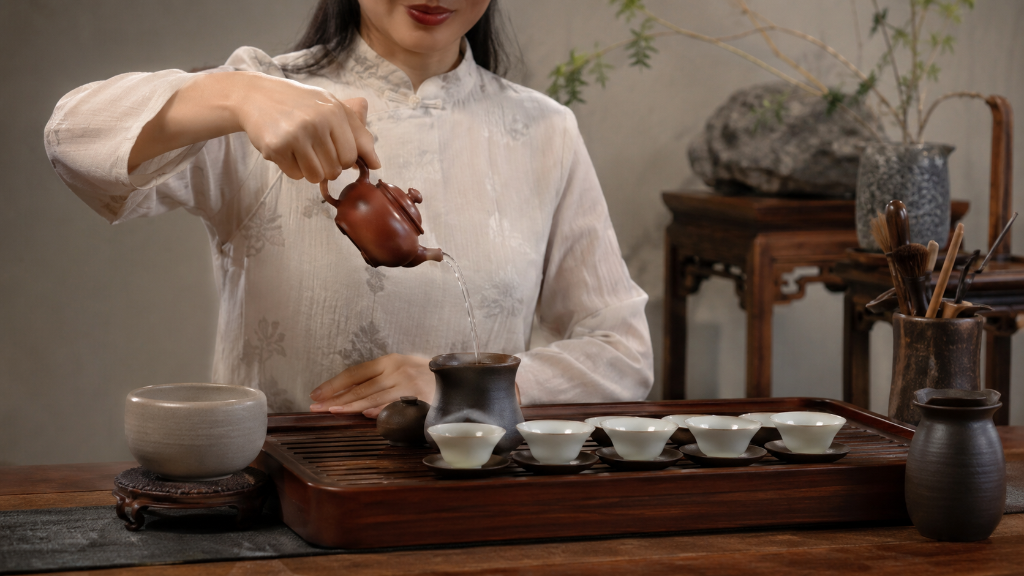
Fujian & Chaozhou · Gongfu Cha
The art of Gongfu tea transforms brewing into meditation. Tiny clay teapots, precise water temperature, multiple short steepings — every gesture deliberate and unhurried.
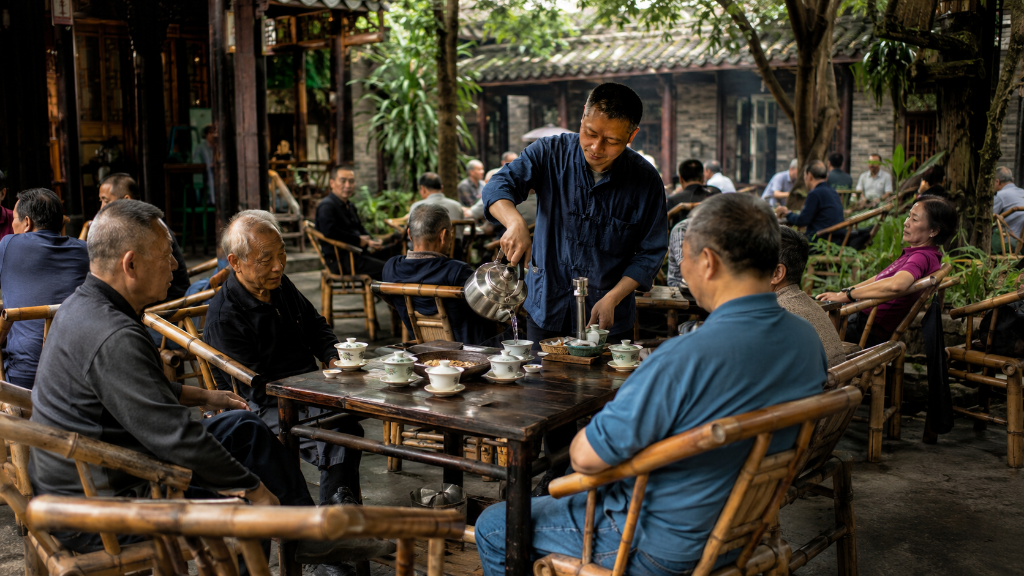
Sichuan · Teahouse Culture
Chengdu's teahouses are living rooms for the city. Bamboo chairs, mahjong tiles, and long-spouted copper kettles — time moves slowly here, and that is entirely the point.
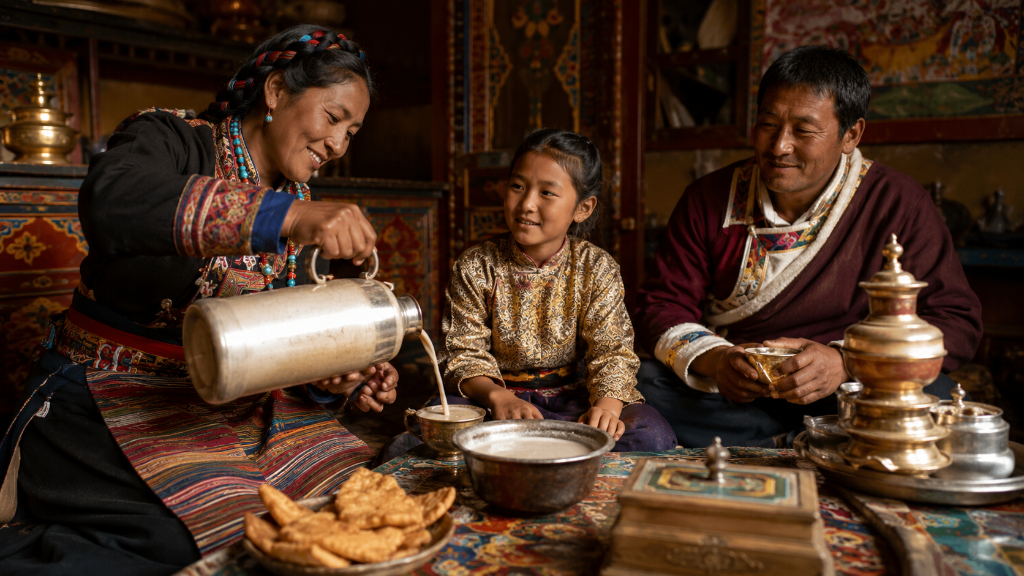
Tibet · Butter Tea
Pressed brick tea churned with yak butter and salt — 酥油茶. Rich, warming, and essential at altitude. Tibetan hospitality demands an ever-full bowl.
Taste Tea
at Its Source
From ancient Yunnan tea forests to Chengdu courtyard teahouses — our local guides will lead you to the finest cups along your journey.
Browse Tea Tours Translate